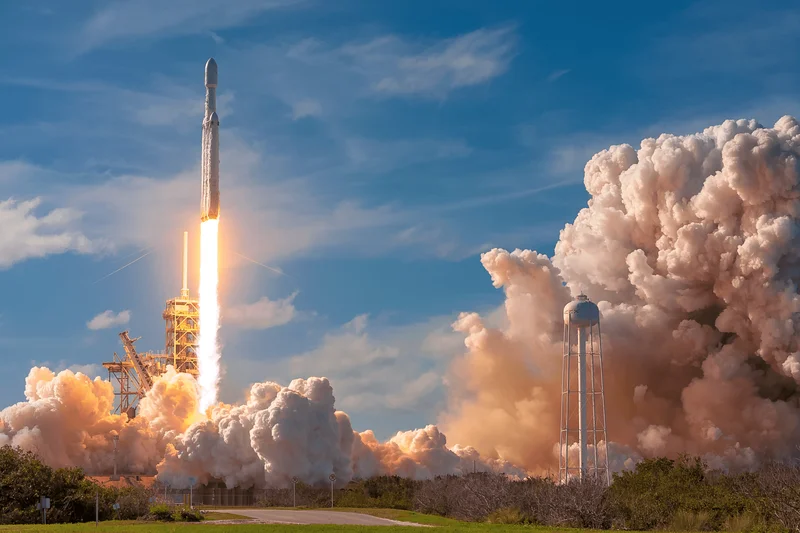
The numbers are in, and if you’ve been paying even a sliver of attention, you’d know SpaceX is currently operating at a pace that borders on absurd. We’re talking about an almost industrial-scale deployment of hardware into orbit, a machine running so hot it’s barely cooling down between cycles. On November 22, 2025, another 29 Starlink V2 satellites shot skyward from Cape Canaveral, marking the 150th Falcon 9 flight this year alone. Falcon 9 rocket continues Starlink deployments with launch from Cape Canaveral - Spaceflight Now Let that sink in. Just a day later, on November 23, another 28 Starlink birds left Vandenberg. This isn't just a high-frequency operation; it's a new paradigm.
But here’s where the raw data, for all its flash and bang, can be a little deceptive. While the global conversation is understandably fixated on every spacex launch today and the spacex launch schedule that seems to update faster than most stock tickers, a deeper dive into the broader landscape reveals a far more complex, and frankly, more intriguing picture. The real story isn't just about who's launching the most; it's about what's being launched, and more importantly, who else is quietly, methodically, building their own formidable space infrastructure.
The SpaceX Machine: A Blur of Numbers
Let's dissect the raw output first, because it’s genuinely impressive. That November 22nd launch from Space Launch Complex 40 wasn't just the 150th flight for a Falcon 9 in 2025, but the 109th dedicated Starlink delivery run. And it was just the ninth of eleven planned Starlink missions for November. When you see a spacex rocket launch now, it’s less an event and more a scheduled departure, like a daily freight train. Booster B1090, for instance, made its ninth flight before gently touching down on ‘A Shortfall of Gravitas’ (a name that always gets a wry smile from me, I must admit). This reuse capability is, of course, the engine of this velocity.
The satellites themselves were placed into a fairly low 170x162 mile orbit (to be more exact, 274x261 km), inclined at 43 degrees, an hour and five minutes after liftoff. This relentless drumbeat of starlink launch after starlink launch is expanding a network that already boasts over 9,000 satellites. It’s an undeniable achievement in operational efficiency, a testament to the assembly-line approach to space access. One might even describe it as a high-frequency trading algorithm applied to orbital mechanics – constantly executing trades (launches) to build its market share (constellation). But I've looked at these numbers for years, and what strikes me here is how this pure volume, while incredible, can also act as a kind of optical illusion, drawing all focus while other significant developments unfold elsewhere. It’s like watching a starship launch, the fiery spectacle consuming all your attention, while a quieter, different kind of construction is happening just out of frame. Does this sheer volume truly equate to an insurmountable lead in every strategic domain, or is it merely one metric in a much larger, multi-faceted competition?
China's Deliberate Ascent: Beyond the Headlines
While the world obsesses over the next spacex launch or a spacex launch florida event, China's space program is executing a remarkably broad and strategically diversified agenda. Consider the return of the Shenzhou-20 crew on November 14, setting a new record for Chinese taikonauts with 204 days in orbit. Commander Chen Dong now holds the accumulated time record for China at 418 days. But here’s a detail that often gets buried: the Shenzhou-20 spacecraft itself was deemed unsuitable for return due to a fine crack on a window, likely orbital debris damage. It’s now an emergency lifeboat until Shenzhou-22 docks. This is a pragmatic, safety-first approach, acknowledging the inherent risks of spaceflight with a backup plan.
And speaking of Shenzhou-22, it’s slated for an uncrewed launch on November 25, the first since 2011. This isn't just about crewed missions. China's Chang’e 6 lunar samples recently revealed direct evidence of oxidized iron minerals – "rust" – suggesting ancient impacts created oxygen-rich conditions on the Moon. That’s fundamental science, expanding our understanding of lunar geology. Looking ahead, the Chang’e 7 mission in mid-2026 aims to search for water ice near Shackleton crater, involving international partners. This isn't just about planting a flag; it's about resource assessment and scientific collaboration.
Then there's the commercial sector. While SpaceX prepares pads for its starship cadence, Chinese commercial launch providers are also developing reusable rockets. Space Pioneer’s Tianlong-3, delayed into next year, is strikingly similar to the Falcon 9 in size, design, propellants, and even boasts a target of ten booster reuses. China prepares to launch uncrewed Shenzhou as maiden launches slip for commercial launch providers - NASASpaceFlight.com - This isn't coincidence; it’s direct, calculated competition. While their overall launch cadence isn't hitting SpaceX numbers yet (a Chang Zheng 11H sea-launch, CAS Space's Lijian-1, a Chang Zheng 12 launch for GuoWang satellites, and a Galactic Energy failure all happened in November), the intent is clear. Their internet constellations, GuoWang (104 satellites) and Qianfan (108 satellites), are expanding, mirroring the Starlink strategy. This isn't a sprint; it's a marathon where different runners are using different training regimens. The fundamental methodological critique here is that focusing solely on one company's launch frequency risks missing the broader strategic shifts in global space power. Are we accurately weighting the value of scientific discovery, crewed mission endurance, and the emergence of direct commercial competitors against the sheer volume of Starlink deployments?
The Real Race Isn't Just About Speed
The data, when viewed holistically, paints a picture far more nuanced than simple launch counts might suggest. SpaceX has undeniably mastered the art of rapid, high-volume orbital deployment, turning space launch into a routine, almost mundane, occurrence. It's a testament to engineering and logistical prowess. But China is playing a different game, a long game, building a comprehensive space infrastructure that spans crewed missions, deep space exploration, scientific discovery, and a burgeoning commercial sector intent on direct competition in reusable rockets and satellite constellations.
We are not just witnessing a spacex rocket dominance; we are observing the early stages of a two-front space race. One front is about raw velocity and network ubiquity, the other about strategic breadth, scientific depth, and the methodical development of parallel capabilities. To ignore the latter is to fundamentally misunderstand the escalating geopolitical and technological competition unfolding in orbit and beyond. The most important question isn't just "who launched what, when?" but "what does this cumulative activity mean for the balance of power in space a decade from now?