# Unearthing Caldera: A Data Dive into Hidden Fault Lines and Shifting Ground
It’s an interesting quirk of language, isn’t it? How a single word can echo across vastly different domains, carrying its core meaning, even as its context shifts dramatically. Take "Caldera." For some, it might conjure images of a serene youth camp nestled by a blue lake. For others, it's the name stitched onto a high-performance trail running shoe. And for a select few, those of us who track the deeper currents of the world, it signifies a geological beast, a cauldron of seismic unrest.
My data feeds, usually so compartmentalized, recently flagged a cluster of entirely unrelated events, all orbiting this one word. A camp, a shoe, a volcano. On the surface, they have nothing in common. But when you strip away the immediate headlines and promotional blurbs, when you dig into the underlying data, a pattern emerges. A pattern of hidden depths, of stability tested, and of the uncomfortable truth that what appears solid can, in fact, be a very thin crust over something volatile. It’s a compelling case study, if you ask me, in how we perceive risk and reality.
The Human Caldera: Camp Caldera's Cracks
Let’s start with the one that hits closest to home, the one that reminds us that human systems, no matter how well-intentioned, can harbor deep, unsettling vulnerabilities. The news out of Camp Caldera wasn't about campfire stories; it was about the arrest of Zackary James Perry. Perry, 29, was picked up in Portland on August 21, 2025, facing a litany of charges: 1st degree rape, multiple counts of sexual abuse, sodomy, and unlawful sexual penetration. The nonprofit, Caldera Arts, moved quickly, firing Perry and contacting law enforcement after staff concerns surfaced.
They issued a Facebook post, naturally, clarifying Perry’s role as a "Youth Advocate and Media Coordinator," not a camp counselor. They also highlighted their "rule of three" safety protocol and thorough background checks. And this is the part of the report that I find genuinely puzzling: if all these protocols were in place, how did multiple accounts of "inappropriate conduct and sexual misconduct," including "unwanted physical contact, inappropriate comments, and coercive behavior," not just occur, but seemingly persist to the point where an arrest became necessary? The Jefferson County Sheriff's Office responded to initial reports on August 12 (a full nine days before Perry's arrest), meeting victims at a neutral location. This suggests a pattern, not an isolated incident. My question isn't just about Perry's actions, but about the data points that were missed or misinterpreted within the organization itself. What signals were present that, in hindsight, scream trouble? And how often do robust-sounding "safety protocols" act more as a veneer than a truly impenetrable barrier? It’s a chilling thought, that even in spaces designed for growth and safety, a caldera of misconduct can form beneath the surface, hidden until the inevitable eruption.
The Material Caldera: Brooks Caldera 8's Footprint
Then we pivot, sharply, to the more quantifiable world of consumer goods: the Brooks Caldera 8 trail running shoe. Reviewed on November 13, 2025, this shoe carries the same evocative name, promising, one might assume, the kind of rugged, stable performance you’d expect from something named after a massive volcanic depression. And the data, at first glance, supports much of that. It's lauded for "outstanding stability," a "comfortable and smooth ride," and "dependable traction."
But here's where the numbers get interesting, and where marketing often diverges from hard metrics. While Brooks positions the Caldera line as "maximalist," the Caldera 8, despite its 36.7 mm heel stack, offers only "moderate cushioning," falling short of a true "max-cushion" experience. The DNA Loft v3 foam is actually 16% firmer than its predecessor. And it's heavy, tipping the scales at 10.9 oz (309g lab measured). That's a significant figure for a trail shoe. It’s like buying a tank expecting a sports car; you get the stability, sure, but you also get the bulk. The super-wide midsole (116.6 mm forefoot, 104.0 mm heel) is a clear design choice for stability, almost like constructing a wide, shallow foundation to prevent lateral movement. But that comes with trade-offs, like the 2/5 durability score for the toebox. So, while the audience verdict of "89 (Great!)" is strong, my analysis suggests that the shoe, much like its namesake, sacrifices a degree of flexibility and lightness for raw, unyielding stability. It's a pragmatic choice, not a revolutionary one. Does the name "Caldera" here imply a deep, protective basin, or a weighty, unyielding structure? The data, I’d argue, points to the latter.
The Earth's Caldera: Campi Flegrei's Unrest
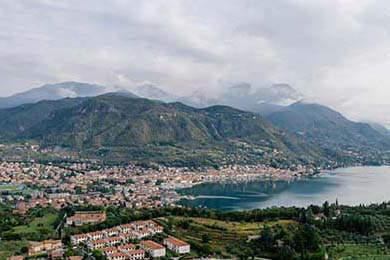
Finally, we arrive at the original, the ultimate "Caldera": the Campi Flegrei volcanic caldera in Italy. This isn’t a metaphor; this is the real deal. A vast, active volcanic system nestled right in the highly urbanized metropolitan area of Naples. This is where the concept of "unseen vectors of instability" truly manifests. A recent study, published November 6, 2025, drilled into the data from 56 earthquakes that occurred during its 2020-2025 seismic crisis.
This isn't a story with an ending. This is a story of ongoing pressure, of a system constantly recalibrating. The caldera has experienced significant ground uplift for decades (1.3 meters since 2011, at 1-2 cm/month), accompanied by over 10,000 earthquakes in the past decade. The study's findings are fascinatingly precise: low seismic radiation efficiency (median 0.1), meaning only a fraction of the stress drop is released as seismic waves. This implies significant energy dissipation through "frictional and inelastic processes," essentially the earth itself absorbing the shock, like a geological crumple zone. The largest event, a Md 4.6, wasn't a single rupture, but a "compound sequence" of two shocks. This is crucial. It suggests a system that's releasing pressure in smaller, controlled bursts, rather than building towards a single, catastrophic event. Or does it?
The low stress drop estimates (<1 MPa) are attributed to shallow depths and "vigorous hydrothermal activity," essentially pore-pressure increase and fault lubrication. This is a methodological critique I'd offer: while the study provides excellent data on past events, the interpretation of these low stress drops as necessarily limiting future maximum magnitudes requires a leap of faith. We're talking about a gas-enriched reservoir between 2 and 4 km depth, confined by a "deformed caprock." That's a lot of potential energy under a lot of stressed material. My analytical brain can’t help but ask: Is this "low stress drop" a sign of a self-regulating system, or is it merely a snapshot of a moment before a more significant buildup? What happens when those "natural barriers" of fault-surrounding damage reach their limit? We’re watching a slow-motion geological drama unfold, and the data, while precise, only tells us what has happened, not what will. The stakes here are immeasurable, and the uncertainty, unlike a shoe review or a criminal investigation, remains profoundly open-ended.
The Unseen Vectors of Instability
From the hidden abuses in a youth camp to the nuanced performance metrics of a running shoe, and finally to the deep, restless heart of an actual volcano, the word "Caldera" seems to whisper a consistent truth: look beneath the surface. Data, if you're willing to unpackage it, rarely tells a simple story. It reveals the complex interplay of forces, often unseen, that dictate outcomes. Whether it's the human element, material design, or geological pressure, true stability is always a negotiation, never an absolute. And sometimes, the quietest data points are the ones screaming the loudest about what's yet to come.