Alright, folks, buckle up, because things are really starting to heat up in the AI hardware race! We've just learned that Intel is losing a key data center AI executive, Saurabh Kulkarni, to AMD. Now, on the surface, this might seem like just another executive shuffle, but trust me, this is a major signpost pointing toward a potential shift in the balance of power.
AMD has been making some serious waves lately. Their data center strategy, which, let's be honest, has been laser-focused on AI, has landed them OpenAI as a major customer. OpenAI! The folks behind ChatGPT! That's like landing a contract to build the Millennium Falcon – everyone's going to want a piece of that action. And according to AMD CEO Lisa Su, they’re “on track” to generate tens of billions in annual revenue in 2027 from their Instinct GPU business.
A Sea Change in AI Hardware
Intel, on the other hand, has been… well, let's just say they've been facing some headwinds. They recently retooled their data center AI strategy, and while they unveiled a new 160-GB data center GPU, it feels like they're playing catch-up. The departure of Kulkarni, who previously helped lead Intel’s Gaudi accelerator chip efforts, is just another blow. Now, Intel's spokesperson said that Anil Nanduri “will assume leadership of the AI product management organization," and they wished Kulkarni well, but let’s be real: losing a VP to your direct competitor never feels good. Exclusive: Intel Is Losing A Data Center AI Executive To AMD
What's the Big Idea here? It's not just about one executive moving companies. It's about the momentum. It's about the perception that AMD is where the action is, where the innovation is happening. It's like when everyone started flocking to Silicon Valley during the dot-com boom – the talent goes where the opportunity is.
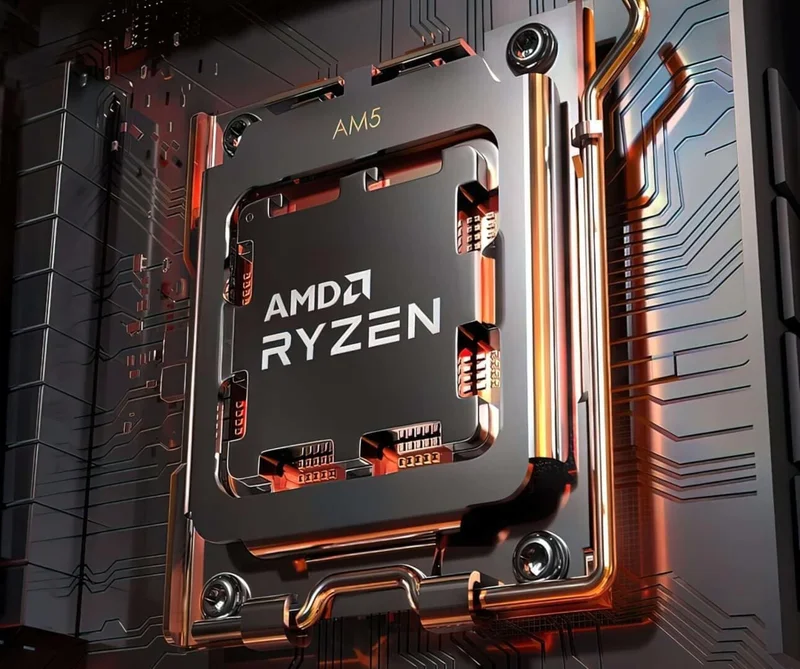
AMD is racing ahead of Intel in its challenge to AI infrastructure giant Nvidia!
This reminds me of the early days of the PC revolution. IBM was the undisputed king, but then a scrappy little company called Compaq came along and started building faster, cheaper, and more innovative machines. Suddenly, everyone was questioning IBM's dominance. Now, I’m not saying AMD is the Compaq of AI, but the parallels are definitely there.
And speaking of Nvidia, let's not forget the elephant in the room: China. According to recent reports, the Chinese government is requiring all state-funded data center projects to exclusively use domestically manufactured AI chips. Ouch. That's a huge market potentially closing its doors to Nvidia, AMD, and Intel. Of course, this also presents a massive opportunity for Chinese companies like Huawei, but it's a geopolitical chess match that could have profound implications for the entire industry.
Now, some might say this is all just hype. I saw one headline that read, "China makes it clear; we do not want Nvidia, Intel, AMD; and Donald Trump cannot help." Pretty bleak, right? But I see it differently. I see it as a catalyst for innovation. When you're faced with adversity, you either crumble or you rise to the occasion. And I have a feeling that AMD, Nvidia, and Intel are all going to be pushing the boundaries of what's possible in AI hardware.
What does this mean for us, for the everyday person? Imagine a world where AI is so powerful and accessible that it can solve some of our biggest challenges – from climate change to disease to poverty. Imagine personalized education, tailored healthcare, and sustainable energy solutions, all powered by AI. That's the promise, that's the vision, and that's what's driving this relentless pursuit of AI dominance.
Of course, with great power comes great responsibility. We need to be mindful of the ethical implications of AI, ensuring that it's used for good and that it benefits all of humanity. But I believe that we're up to the challenge. I believe that we can harness the power of AI to create a better future for ourselves and for generations to come.
When I look at AMD's trajectory, and the industry's collective response to the challenges, I honestly just feel this surge of excitement. It's a reminder of why I got into this field in the first place.